How does the brain organize our understanding of the objects we see? A common view is that the brain sorts objects into clear categories — faces, tools, places — with dedicated regions for each. But what if it works the other way around?
Here, we asked whether the brain instead represents objects along continuous dimensions that matter for behaviour. While previous work has mapped some of these dimensions to the brain (like real-world size), a complete model of how the brain represents the multidimensional nature of objects has been missing.
We took dimensions derived from large-scale human similarity judgments — how people spontaneously group and distinguish objects — and mapped them onto brain activity across the cortex using fMRI.
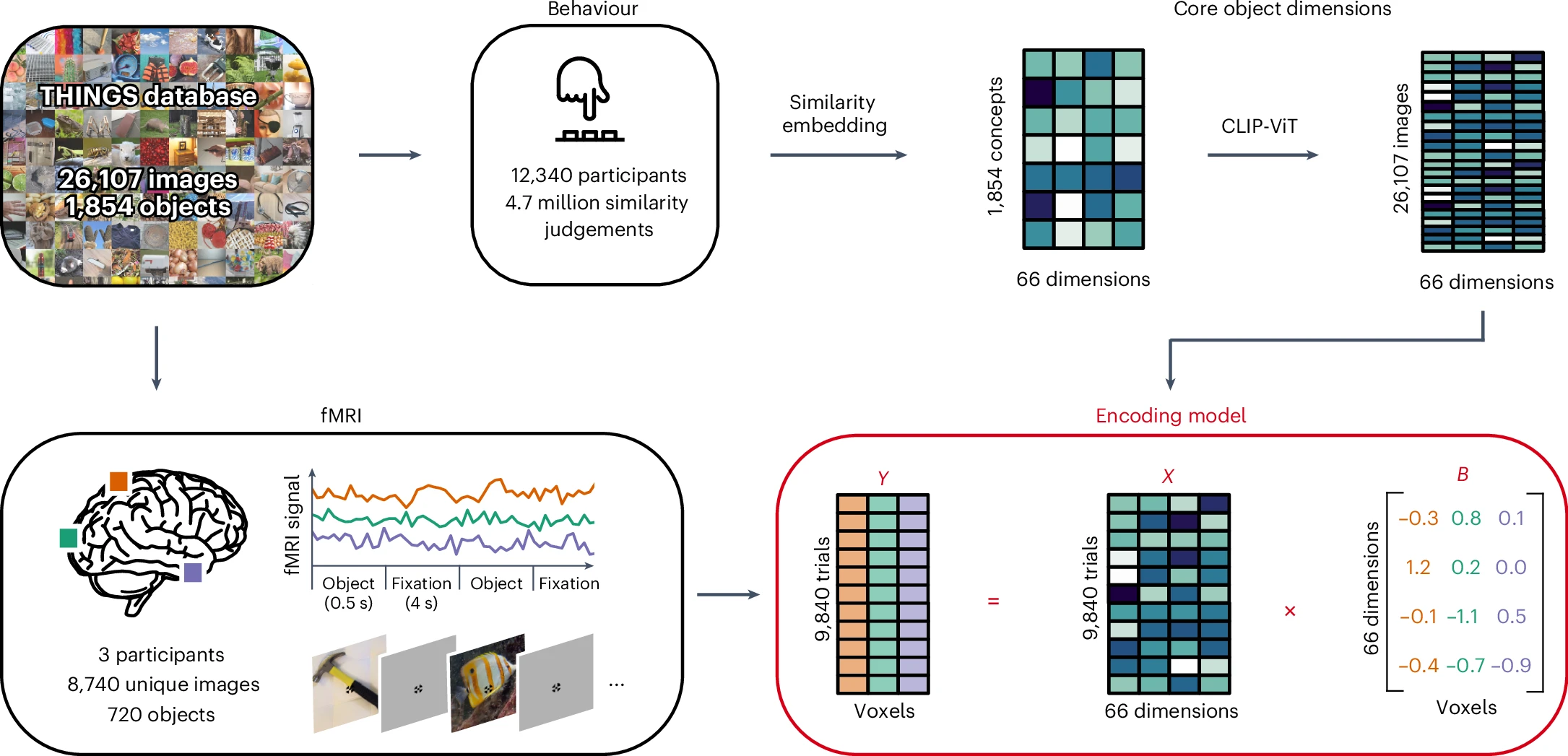
What we found
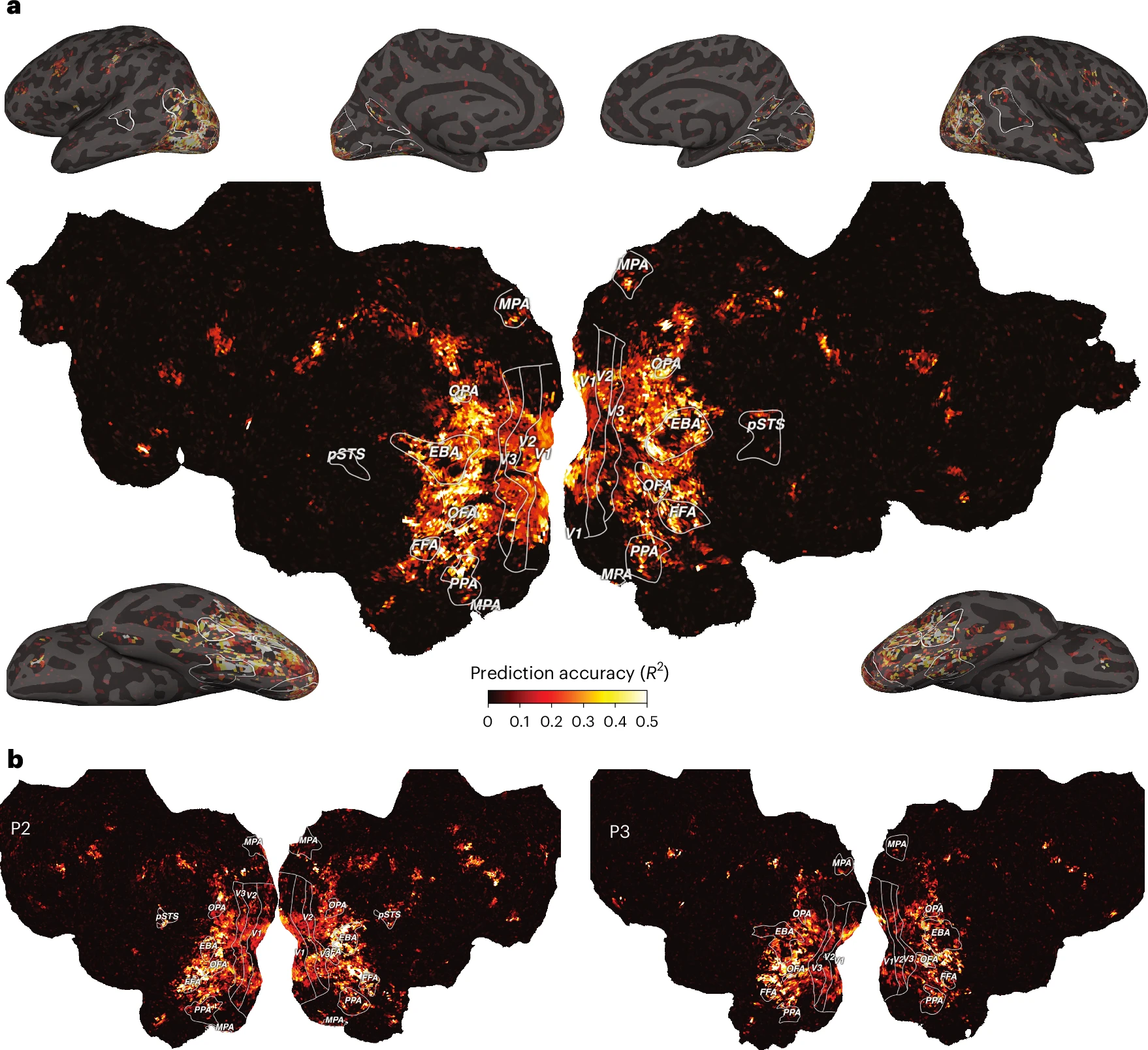
Why it matters
The findings suggest that object vision is organized around continuous, behaviourally relevant dimensions. This framework also helps reconcile ongoing debates about seemingly opposing views of how the brain represents objects — distinct regions vs. broader tuning maps.
More generally, this work puts forth an alternative approach for understanding the brain: focusing less on presupposed categories or visual features, and instead starting with human behaviour as a guiding principle for brain organization.